Picture a map of the world. Now zoom into North America and visualize the long borders that separate the United States from Canada and Mexico. These lines are so important even though we can't see them. People must learn about these lines to know they're there, otherwise they might find themselves crossing them and potentially getting into big trouble. Personal boundaries exist in the same way. We can't see them, but they're definitely there and they are very important in maintaining what stays inside and outside of each individual's daily life, their relationships, their rights, their comfort zone, and many other areas.

Recognizing and respecting personal boundaries is an essential skill that in the best case scenario is learned through dialogue and example. Just like the border of a nation, individuals ideally mark their own borders based on what they understand as strong, yet healthy boundaries. Unfortunately this is not always the case due to traumatic events, discoveries, or even invasions from outside. Sadly, boundary lines often get blurred. Guidance is especially important when our boundaries are crossed and it is no fault of our own. Sometimes we might not even know.
|
❀ ✿ ❁ ✾ ✽ ❃ SUMMER SPECIAL ❀ ✿ ❁ ✾ ✽ ❃
ONLY FOR NEWSLETTER SUBSCRIBERS!!
Enjoy 15% and FREE shipping on any order over $25.00 until AUGUST 30, 2013
ENTER CODE SUMMERNEWS13 AT CHECKOUT
Sorry, this deal cannot be combined with any other offer and is not valid at conferences.
Free shipping only applies within the continental U.S. |
|
|
Books and Boundaries
The books below all deal with the idea of healthy boundaries
even if they don't necessarily call them out by name.
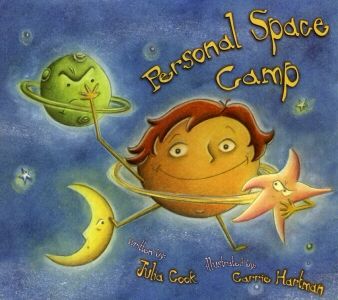
Louis is a self-proclaimed space expert. When he is invited to Personal Space Camp by the school principal, Louis learns that knowing about personal space is just as important as knowing about the stars in the sky. Personal Space Camp is a great help in teaching children about boundaries and makes it humorous to boot. This book helps parents enroll children in their very own personal space camp and zoom towards being a personal space expert. A supplementary guide features hands-on ideas that complement the storybook.
A Book For Kids About Private Problems, Touching Problems, and Other Stuff by Eliana Gil and Jennifer Shaw
 I love this book. It's the first book I've seen that speaks directly to concerns of sexualized children while its practical tools maintain an accessibility that can help all children. This book about private parts, touching, touching problems, and other stuff is written in very clear, kid-friendly language. It includes more than just "touch" boundaries and shares several techniques to turn around unhealthy thoughts through self-talk and other great ideas. It is narrated by a butterfly named Bobbi who helps explain concepts that might be a little tougher for kids to grasp on their own. With the guidance of a grown-up, this handbook helps kids learn to set healthy boundaries for themselves and respect the boundaries of others. I love this book. It's the first book I've seen that speaks directly to concerns of sexualized children while its practical tools maintain an accessibility that can help all children. This book about private parts, touching, touching problems, and other stuff is written in very clear, kid-friendly language. It includes more than just "touch" boundaries and shares several techniques to turn around unhealthy thoughts through self-talk and other great ideas. It is narrated by a butterfly named Bobbi who helps explain concepts that might be a little tougher for kids to grasp on their own. With the guidance of a grown-up, this handbook helps kids learn to set healthy boundaries for themselves and respect the boundaries of others.
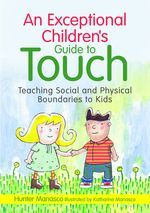
Even friendly touches have the potential to become problematic. Children often misunderstand social rules and norms, and perhaps more often totally lack knowledge of them. An Exceptional Children's Guide to Touch is fully illustrated and especially helpful for children with social difficulties or those on the Autism spectrum, but its accessibility makes it an asset for all. Readers will find 5 stories in this helpful guide, each dealing with a different kind of touch. A sixth story examines getting your picture taken and other issues that may surround recording devices. This is sure to become a classic!
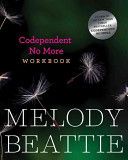 Codependent No More -Workbook by Melody Beattie Codependent No More -Workbook by Melody Beattie
Fill in the blanks on the way to understanding the impact of codependency. This companion to the classic book of the same name is profoundly inspirational as well as pragmatic. Each chapter opens with a quote from Codependent No More leading into lessons and activities on improving your outlook and way of life, one step at a time.
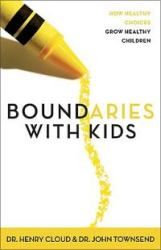
If you're looking for a spiritually-based guide to effectively setting boundaries in child rearing, this is it. Boundaries With Kids offers parents solutions for issues surrounding responsibility and self-control. Rather than being problem-centered, the authors choose to take what they call a "principle-centered" approach that bases itself on spiritual ideas. Each chapter includes examples and illustrations so that adults may easily adjust their application of the concepts based on the child's age or maturity level.
DeeDee's Bibliotherapy Corner
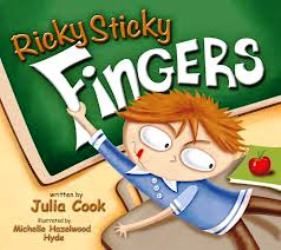
Ricky Stick Fingers is an EXCELLENT book by the wonderful author Julia Cook.
Ricky says he can't help from taking other people's things--they just stick to his sticky fingers! Ricky has difficulties denying his urges to steal and even makes excuses to take the belongings of others. When he sees the coolest new toy at the market or when his classmate's candy sounds so tasty and fun, he just can't say no, his fingers are sticky! Stealing is one of the most hurtful invasions of personal boundaries. Ricky feels a sense of entitlement and he doesn't understand how his actions affect others' lives and how it makes them feel. Ricky finally learns what it feels like to have something stolen from him. With help from his mother, little Ricky learns the lesson that it's not alright to reach his sticky fingers into the proverbial pockets of others. His mom helps him use his conscience and empathy to make amends with the people who he has hurt with his behavior.
This book is an EXCELLENT teaching tool for children and its pace makes its fun to read too. In addition to the discussion primers at the end of the book, there are so many activities that parents and professionals can combine with Ricky Sticky Fingers to have a lasting impact. I recently presented the following activity on building character and experiencing social-emotional learning. This activity is super easy to put together.
First divide children into groups of 4 to 6 kids. Have kids use a paper plate or cut out a circle from a template. Each child should divide their circle into 4-6 pieces as if cutting a pie. In each section, children should draw or write a favorite object or possession that is important to them. After each section is completed, they should number the pieces based on how important each one is to them, with the most important being #1, the next #2, and so on. (You can offer children the opportunity to discuss their choices with their group.)
The next step requires a spinner. You can use a premade spinner or make one with a paper plate (see how here, just substitute numbers).Each child takes a turn to spin the spinner. The number that the spinner lands determines which item is stolen from the child. That slice/item is then placed inside a box. A potential variation with older children could be that the number on the spinner signifies the number of items stolen. This combines a fun activity and the opportunity to address character including honesty, respect, and empathy.
Ideas for Processing Questions:
- What are some of the feelings you experienced during the activity?
- How might someone feel to have something valuable taken without permission?
- What are the reasons people steal?
- What would you like to say to the person who has taken the item?
- What should someone do if they witness someone stealing something?
|
We Always Love Hearing From You!
If you have suggestions or inquires regarding our website, product line, or need help finding titles or resources, please feel free to contact our friendly staff.
You can email us at info@selfesteemshop.com
or call us toll-free at (800) 251-8336
Please know that while we are constantly updating our website, it still contains only a small fraction of the materials we have in our store. If you are looking for something in particular and cannot find it, please give us a call. If we do not have it in stock, we will order it right away and ship it to you. We are always happy to assist you. Thank you for again supporting our independent bookstore!
Thank You From the Self Esteem Shop Team
|
| |
|
VISIT US AT THESE
UPCOMING CONFERENCES
|
|
July 8 - 18
Denton, TX
Featured Speakers:
Bonnie Badenoch
Mary Morrison Bennett Stephen Armstrong
David Crenshaw
Esther Hess
Sue Bratton
July 9-12
Clinton Township, MI
Featured Speakers:
Bill Steele,
Caelan Kuban
Mary McHenry
Cheri Spehar and more
July 11-12
Evanston, IL
Keynoters
Eliana Gil
Edward Tronick
July 12-13
Rockville, MD
Keynoters
Eric Green
Jennifer Baggerly
July 18-21
Detroit, MI
Keynoters
Edward Hallowell
Sari Solden
September 18-21
Colonnade, TX
Keynoters
Pat Ogden
Kim Golding
September 26-27
Presenter
Eliana Gil
|
| CONTACT US |
|
Self Esteem Shop
32839 Woodward Ave.
Royal Oak, MI 48073
| |