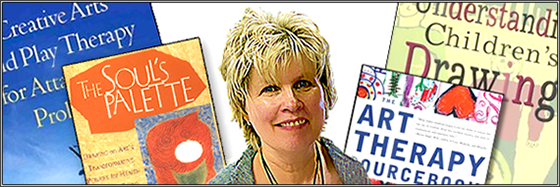
Cathy Malchiodi on Meet the Author
|
|
|
|
Cathy Malchiodi, PhD, LPAT, LPCC, ATR-BC, REAT, is a research psychologist, a Board Certified and Licensed Professional Art Therapist, Licensed Professional Clinical Counselor, Registered Expressive Arts Therapist, and has had over 30 years of experience and education in trauma intervention and disaster relief and integrative approaches to health.
|
|
|
Q.) Being a part of so many publications and content, do you have any favorites that stand out? Is there an essential Cathy Malchiodi read?
I think Understanding Children’s
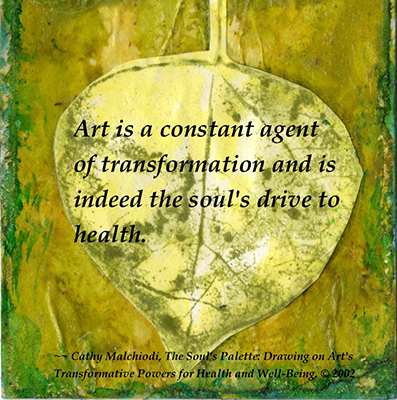
Drawings is one of my favorites. However, I now keep returning to The Soul’s Palette: Drawing on Art’s Powers for Transformation and Wellness, because it has been useful for helping professionals who want to experience the expressive arts on their
own. I also use it with teens and adults I see in practice because the creative experiences in it are structured, yet open-ended to allow for personal expression to emerge. And I am very proud of the second edition of Creative
Interventions with Traumatized Children because it now includes wide-ranging approaches like art therapy and EMDR, how to use clay with children, family crisis intervention techniques, self-regulation activities and mindfulness with children and teens. |
Q.) How has art therapy and trauma-informed therapy evolved since your early days in the field?
First, trauma-informed practice was not
really a prominent model a decade ago. I think after September 11, 2001, we really started to look at the experience of trauma differently because we had the opportunity to learn from large groups of traumatized individuals. At the same time we also were learning that talking about people in treatment via “pathology-driven” language that is generally diagnostic, demeaning and culturally insensitive was inappropriate and counterproductive. However, I found myself 30 years ago reframing children’s
trauma responses as “adaptive coping skills” rather than “defense mechanisms.” Somehow I came to respect their survival skills, post physical and sexual abuse and violence and saw their response as natural reactions to survive unnatural circumstances.
Art therapy as a field is slowly catching up to the language of neuroscience and the overwhelming evidence that trauma is a body-based experience. Music therapy and dance/movement therapy have been quicker to understand and grasp neurobiology and trauma,
probably because music involves rhythm as does movement. It is impressive to read how experts like van der Kolk and Stephen Porges have embraced the importance of movement in the form of dance therapy and yoga in treatment with trauma survivors; that is why I have included those approaches in my work with returning military and their families and children who have survived violence or assault.
To read the full interview, click here. |
Gift Ideas for the Holidays |
|
|